
Developments in Sewing Machine Technology: Sergers & Coverstitch Machines
Sewing machine technology has come a long way. Look at a new flagship machine from any of the major brands and you’ll be blown away by the technology built into it—— stitch regulation guided by infrared and lasers, the ability to scan a drawing and turn it into an embroidery file, stitch projectors, iPad-esque touchscreens, and more.
With that said, today I will make the argument that the corner of the sewing world inhabited by sergers and coverstitch machines is where the most important technological developments have taken place. The vast majority of innovation comes from the engineers at Baby Lock, and their improvements in technology is rooted in a utilitarian spirit. Their sergers aren’t as flashy as other brands— no color touchscreens or anything like that. Instead they are designed as tools that are easy to use, difficult to break, and allow the user to work seamlessly (no pun intended).
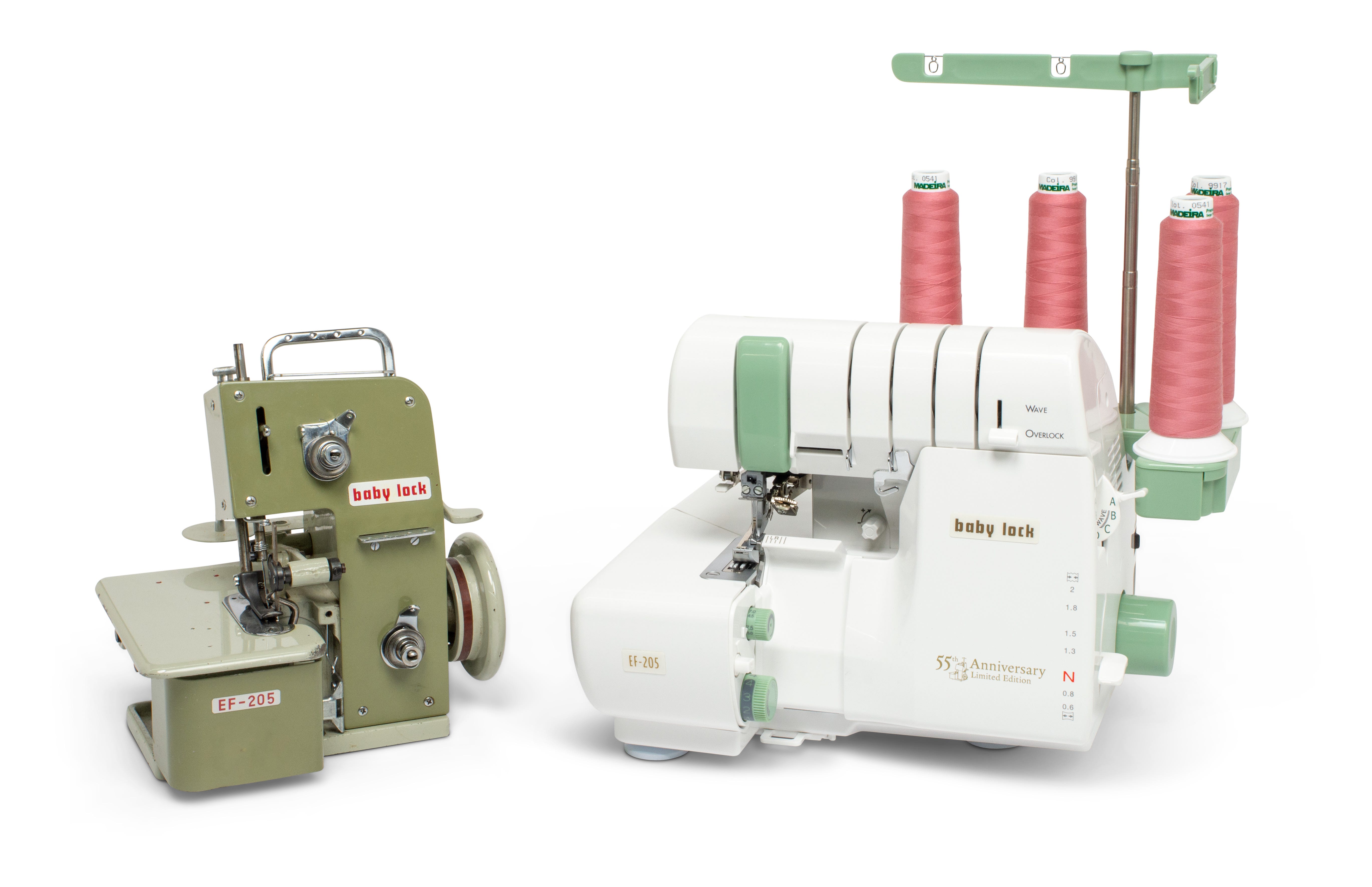
What is a Serger?
A serger machine, also known as an overlock machine, is a specialized machine designed to create professional-quality seams, hems, and finishes.
Unlike a traditional sewing machine, a serger uses multiple threads (typically three, four, or five) to simultaneously stitch fabric, trim excess material, and overcast raw edges. This combination of functions helps prevent fraying and gives garments and projects a polished, professional-made look.

Why Would I Want to Use a Serger?
Sergers excel at handling tasks that traditional sewing machines struggle with, such as sewing stretchy fabrics or creating clean, fray-resistant seams.
One reason why sergers excel in this arena is because the machine is designed to make an overlock stitch, which has greater ability to stretch as fabric stretches in comparison to the lockstitch that a sewing machine is designed to make.
Another reason sergers are so good at sewing stretchier fabrics is because are capable of differential feed.
A serger with differential feed has two sets of feed dogs—one in the front and one in the back—that can move at different speeds relative to each other. By adjusting the differential feed settings, users can prevent fabric from puckering, stretching, or gathering unintentionally. For instance, when sewing lightweight or stretchy fabrics, increasing the differential feed can help eliminate unwanted ripples. Conversely, decreasing the differential feed can be used to create intentional gathers or ruffles. This level of control is especially beneficial for achieving professional-quality finishes on a wide range of fabrics, from delicate silks to heavy knits, making differential feed an indispensable feature for both beginner and experienced serger users.
Additionally, sergers can create decorative edges and unique stitch patterns, adding a creative flair to garments and home decor items.
What are the Best Sergers?
In my opinion, the Baby Lock serger machines coming out of the Suzuki factory in Yamagata, Japan are clearly the best sergers in the world. They’re easy to use, difficult to break, and last for decades. I have not encountered evidence to persuade me to recommend any other brand, though I am open to arguments that would change my mind.
You can see these Baby Lock sergers being made by hand in the Yamagata factory here:
Founded in the 1960’s, Baby Lock has more than half a century of experience manufacturing sergers, and that experience translates into a remarkably reliable product. They are mechanically sound and the electronics are superb, making them a favorite of both sewing enthusiasts AND sewing machine technicians around the world.
Where Baby Lock really stands out is that they have combined this reliability with innovative features that competing manufacturers have only recently began to copy. There are 2 features in particular that stand out above the rest:
Air-Threading Loopers (and needles)
Automatic Thread Delivery (ATD)
Air-Threading Sergers
A challenge with traditional sergers is the complexity of threading 3-5 different spools of thread, requiring precise threading through multiple small guides and tension disks, which can be confusing and time consuming.
Air-threading on a Baby Lock serger is an innovative feature that simplifies the threading process, making it faster and more user-friendly. With air-threading, Baby Lock sergers use a built-in mechanism that utilizes a burst of air to automatically thread the loopers with minimal effort from the user.
The process works by inserting the thread into a designated threading port and then pressing a lever or button to engage the air-threading system. A stream of air pushes the thread through the internal pathways and into the looper eye, completing the threading in seconds.
This technology eliminates the frustration of manually threading loopers, especially in tight or hard-to-reach areas. Baby Lock’s air-threading feature is particularly appealing to sewists of all experience levels, as it saves time and ensures consistent threading for smooth, high-quality stitches.
Automatic Thread Delivery (ATD)
Another challenge with traditional sergers is that it is notoriously difficulty to balance the tension. Not only are there 3-5 thread spools under tension, but they create a stitch that sits on the edge of the fabric, opposed to a sewing machine where the stitch is a simple knot from two thread spools that sits in between the fabric we are sewing.
Again, Baby Lock addresses this problem with utter perfection. Automatic Thread Delivery (ATD) is a beautiful mechanical system (no electronics involved) that measures the amount of thread needed to make a perfect stitch. Tension dials are eliminated and any brand or type of thread can be used without adjustments. Perhaps a more simple way to explain ATD is that you can think of it essentially as automatic tension.
ATD works by sensing the thread feed and making precise adjustments in real-time, ensuring even, professional-quality stitches every time you sew. Whether you’re working with delicate silk, stretchy knits, or heavy denim, ATD ensures consistent results without the need for constant fine-tuning of tension, allowing users to focus more on creativity and less on fussy details.
Read the article below or more information on Baby Lock and their history:

Serger FAQs
What Sergers are Best for Beginners?
If the $1,500-2,000 price point is compatible with one’s budget, then the Baby Lock Victory is ideal for beginners. The air-threading system takes the fuss out of threading, while ATD takes the fuss out of balancing tension, which will make your serger experience stress free and fun.
Sergers vs Coverstitch Machine
While sergers and coverstitch machines may look similar and share some overlapping features, they serve distinct purposes in the sewing world.
A serger machine is primarily used for overlocking, which involves stitching seams, trimming excess fabric, and overcasting edges to prevent fraying, all in one step. It is excellent for creating strong, stretchy, and professional-looking seams.
On the other hand, a coverstitch machine is designed specifically for hemming and topstitching. It does not have blades for trimming fabric but excels at creating clean, durable hems, such as those seen on t-shirts, and decorative stitching on the right side of the fabric.
In addition to their sergers, Baby Lock makes a couple incredible standalone coverstitch machines: the Baby Lock Euphoria and the Baby Lock Applaud.
Can Sergers do Coverstitching?
Yes, both the Baby Lock Splendor and Baby Lock Triumph are combination machines capable of performing the function of a serger machine and a coverstitch machine.
There are several key differences between the Accolade and Triumph.
The Triumph has air threading for both the loopers and needles, whereas the Splendor only has air-threading loopers.
The Triumph has a larger 5” inch workspace to the right of the needle, about double the size of the Splendor.
The Triumph is design with a slider to control variable speeds while sewing.
The Triumph as a knee lift that raises/lowers the presser foot.
Thank you for Reading!
If you find my work valuable, please upgrade to become a paid subscriber. All revenue supports my family and goes a long way in helping me to continue to write.
You will unlock the full archive of over 150 similar sewing machine educational essays and articles.
All support is hugely appreciated.
—Cale
Thank you for another great article about sewing and serging. I was especially happy to see a photo of the 55th Anniversary Babylock Serger in your post. I bought the 55th Anniversary model serger last year after attending an intro class to Babylock sergers at my local dealer. I used the 55th, the Triumph and the Accolade to make a small purse during that class. I was introduced to the different stitches, the cover stitch and the Wave stitch. The 55th Anniversary model has the Wave stitch and fit my price point. I am a novice to the serger world, but, a very experienced sewist of 50 years. I sew on the Babylock Soprano. I am very pleased to add a serger to my sewing skill set. Babylock took the mystery and intimidation out of serging.
I love the rundown of sergers having the desire 3 which is a mini 5 thread babylock Coverlock machine has made my sewing experience much more enjoyable